
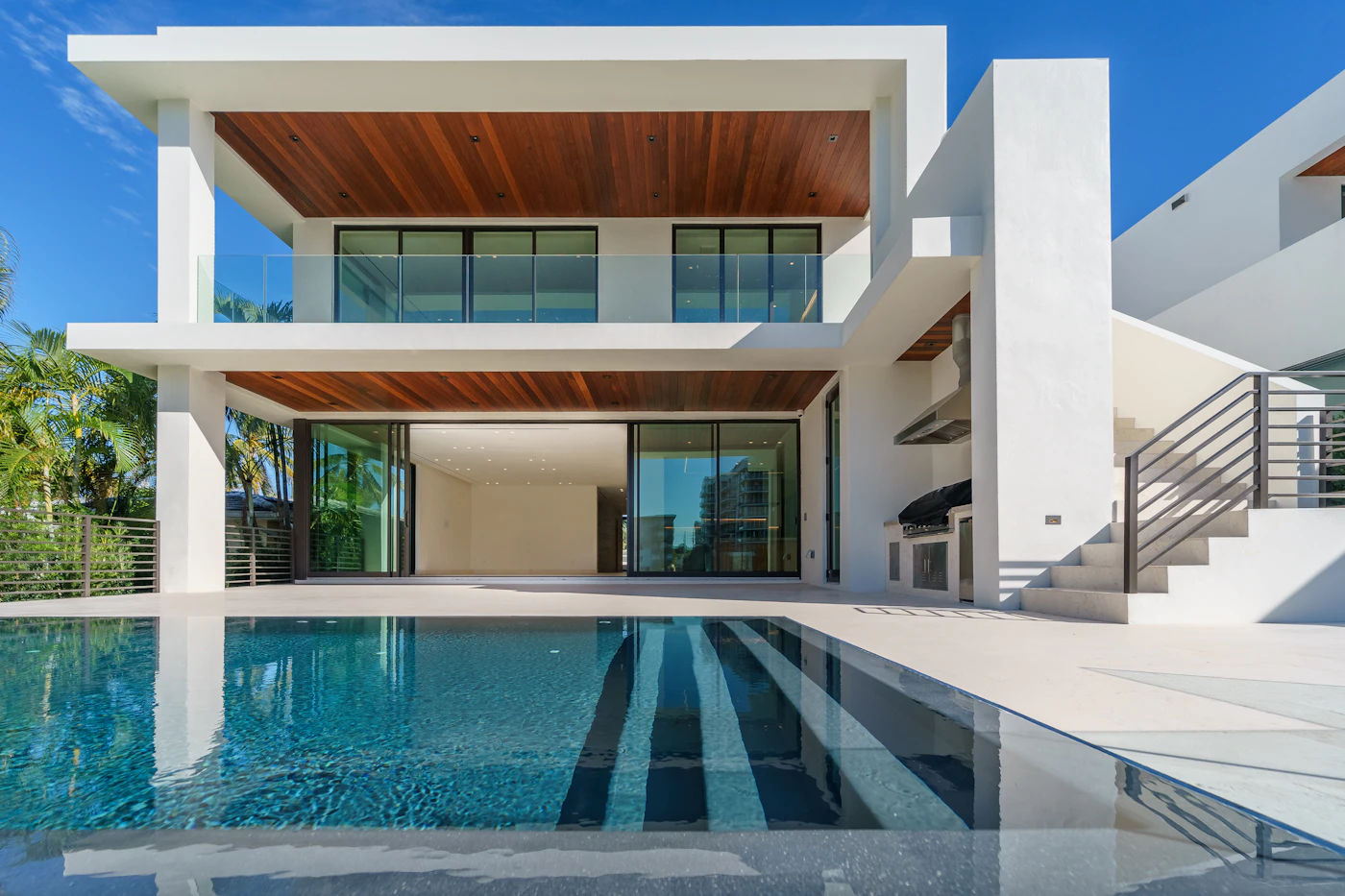
Properly specified outdoor speakers will survive an Oklahoma summer for many years. Ordinary ones will not, and the failure is rarely dramatic. They just get quieter and duller over two or three seasons until somebody notices the patio does not sound like it used to.
Oklahoma is genuinely harder on outdoor equipment than most of the country, and it is worth spending more on what lives outside than on what lives in a ceiling indoors.
What actually kills outdoor audio here?
Four things, roughly in order.
Sustained heat. Not a hot afternoon, but weeks of it. Heat degrades the foam and rubber surrounds around a speaker cone, and it cooks adhesives. A speaker that sits through weeks of mid-90s afternoons, and far hotter surfaces in direct sun, ages far faster than the same speaker in a milder climate.
UV. Direct sun breaks down plastics and finishes. A grille that looks fine in year one is chalky and brittle by year four if it was not made for it.
Hail. This is the Oklahoma-specific one. A speaker mounted face-up or on an exposed soffit takes direct hits. Mounting position matters as much as the product.
Moisture cycling. It is not standing water that does the damage so much as the daily cycle of humidity and temperature swings, which pulls moisture into anything not properly sealed.
What does properly specified mean?
Weather-rated enclosures, stainless hardware, UV-stable grilles and materials, and sealed drivers. That is the baseline, not the premium option.
Stainless is the detail people miss. Ordinary steel hardware rusts, and rust streaks down whatever the speaker is mounted to, so a stone or stucco wall ends up stained long before the speaker fails.
Then there is placement, which is free and matters enormously. Under an eave rather than fully exposed. Not aimed straight up. Not sitting where roof runoff lands. Integration at Work, AV places outdoor speakers with the weather in mind first and the acoustics second, because a perfectly aimed speaker that fails in three years is not a good outcome.
Why do I need more speakers outside than inside?
Because there are no walls.
Indoors, sound reflects off surfaces and fills the room, so two speakers cover a lot of ground. Outdoors it just leaves. Sound disappears into the yard instead of bouncing back, which means an outdoor space generally needs more speakers, spread across the area, than an indoor room of the same size.
The instinct is to put two speakers by the back door and turn them up. That produces a loud spot near the house, nothing usable at the far end of the patio, and a neighbor relations problem. Several speakers at moderate volume, distributed across the space, sounds better and carries less.
On larger Claremore and Coweta properties, where the outdoor area might include a patio, a pool and a fire pit some distance apart, those are genuinely separate zones rather than one.
What about landscape lighting? Same problem?
Same climate, same principle, different failure mode.
Big-box landscape fixtures are typically thin aluminum or plastic with a sealed LED module. They corrode, they fog, and when the module fails the whole fixture gets thrown away. Two or three seasons is a normal life.
Landscape-grade fixtures are usually brass or copper, which weather to a patina rather than corroding through, and many take a replaceable lamp. They cost noticeably more and they last long enough that the cost per year is lower. Integration at Work, AV sizes transformers and zones to the lot rather than to a single run.
The other difference is transformers and zones. A single transformer will not carry a large lot, both because of total load and because of voltage drop over distance. Fixtures at the far end of a long run get dim, which people misread as a fixture problem. Larger properties need multiple zones and properly sized transformers, which is a design question rather than a shopping question.
Can a regular TV go on a covered patio?
Not for long, and this is a genuinely expensive mistake.
Even fully covered, humidity, temperature swings and insects get into an indoor television. Insects in particular are a real failure cause outdoors and one nobody expects. And an indoor screen is nowhere near bright enough to watch in daylight, so it disappoints even while it is working.
Outdoor-rated displays are sealed, built for the temperature range, and made in partial-sun and full-sun versions. Which one you need depends on where the screen actually sits and what time of day it gets used, and that is worth measuring rather than guessing.
What does outdoor cost in the Tulsa area?
Patio audio with four to six speakers typically runs $3,500 to $9,000.
Landscape lighting with landscape-grade fixtures on a typical lot lands between $4,000 and $12,000.
Larger acreage properties with multiple zones, an outdoor kitchen and a display generally run $20,000 to $60,000 and up.
What moves the number is lot size and trenching, fixture count and grade, how many audio zones, and whether a weather-rated display is included.
What is worth doing before summer?
If you already have outdoor audio, listen to it carefully at the start of the season. Dull, quiet, or one speaker noticeably weaker than the others usually means surrounds are going, and it is better to know in May than to discover it during a party in July.
If you are planning to add it, run conduit while the yard is already open for anything else. Trenching is most of the cost of adding outdoor systems later, and doing it once for lighting, audio and a future camera run is dramatically cheaper than doing it three times.
Integration at Work, AV designs and installs outdoor audio and lighting for homes across the Tulsa metro, including Claremore. Free in-home design consultation, and a firm number before any work begins. Call (918) 494-9675.
Troy Erickson is the owner of Integration at Work, AV in Tulsa, Oklahoma. He has been designing and installing lighting control, motorized shades, audio, video and home networks across the Tulsa metro for over twenty years, and works on everything from 1920s Midtown homes to new construction and acreage properties. Integration at Work, AV builds on Lutron and Control4 and keeps a showroom in South Tulsa.